8am MyCase + AI
A Small-Town Law Firm's Guide to Modern Client Acquisition
Small-market law firms have an edge most firms would envy — people already know who you are. The challenge is turning that into consistent client volume without losing the personal touch that earns the trust in the first place. Here's a short framework, with three specific tools worth knowing about.
Marketing: referral gets noticed, search gets chosen
Referral is still your strongest channel — about half of legal clients start by asking someone they trust. But almost all of them then look you up online before calling. So the job isn't choosing referral over digital marketing, it's making sure your Google Business Profile and website hold up once someone who already likes you goes looking. A profile full of duplicate or truncated service listings undercuts the trust a referral just built.
Intake: where the case actually gets won
A good intake call runs the same core sequence every time: get contact info first, run the conflict check before hearing details, ask the questions specific to the situation (DUI license-suspension deadlines, safety for a domestic call, confidentiality for an immigration call), and book a next step before hanging up. This costs nothing but a checklist and consistent staff training, and it's usually the highest-leverage fix available.
The Technology Layer
This is where a few specific tools can do real work, used narrowly rather than as a wholesale replacement for your people.
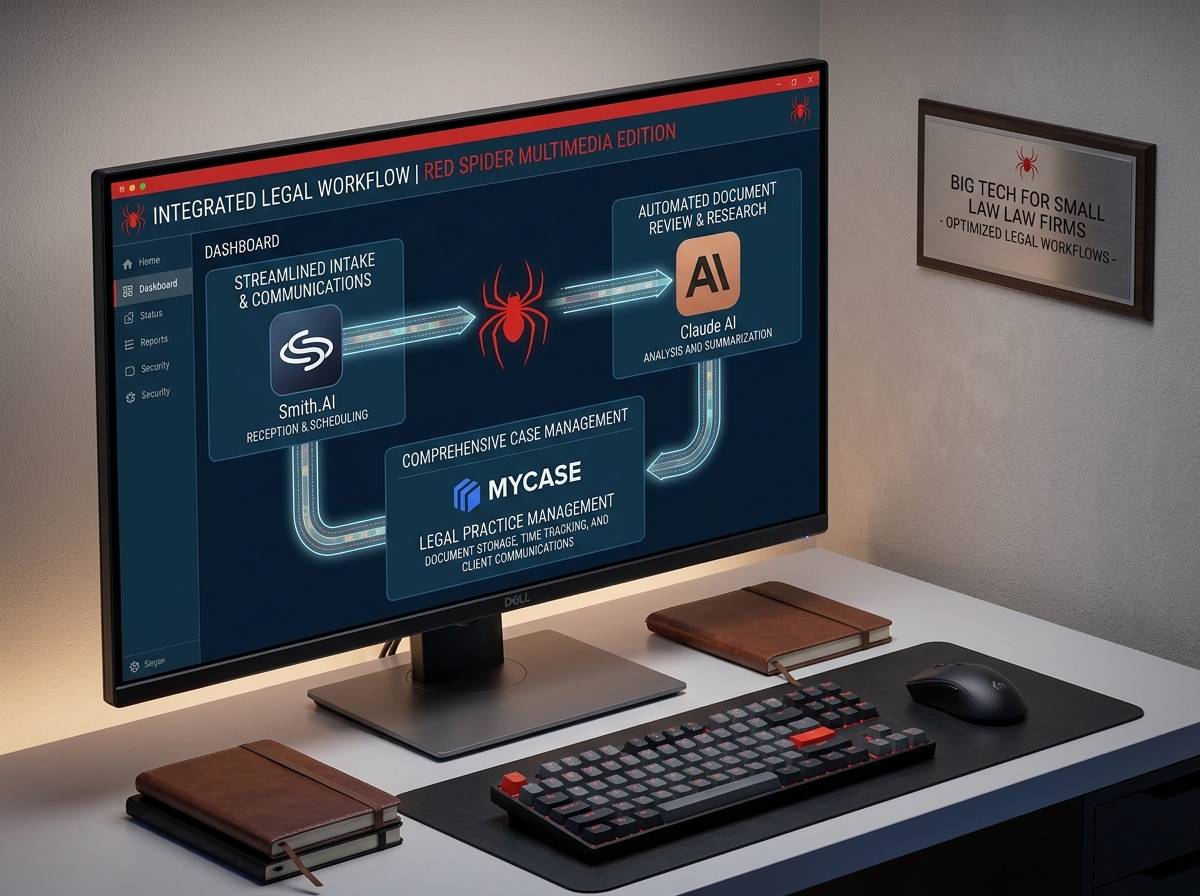
Case management — 8am MyCase. MyCase is the practice-management system where your case data, billing, and documents already live. The value of connecting it to an AI tool like Claude is in what you can do with data that's already there: pull a productivity report, check billing status on a case, or search across documents and notes in plain language instead of digging through the interface. It doesn't replace anything — it just makes the data you already have faster to use.
AI assistance — Claude Connectors. Once a system like MyCase (or your calendar, email, or documents) is connected, an AI assistant can act on it directly: drafting a client update pulled from real case notes, summarizing a document, or generating a recurring report on a schedule, without someone manually assembling it each time. For a small firm without a dedicated ops person, this is the difference between "we should really run that report" and it actually happening every week.
Call handling — Smith.ai (or similar). This is where the small-town caution matters most. Don't replace your front-of-house staff — people picking up the phone locally is part of your advantage. Instead, forward to a service like Smith.ai only for overflow (staff on another line) and after-hours calls, with clear rules for escalating anything urgent — a detained family member, a safety concern, a DUI deadline — straight to an attorney. Used this way, it catches the calls you're currently losing to voicemail without touching the daytime experience that's already working.
Marketing gets you found, intake earns the case, and these tools close the gaps in between — missed calls, slow reporting, data that's there but hard to use. None of it replaces the relationship-driven parts of a small firm's business. It just makes sure the mechanical parts don't leak.